Welcome! 歡迎! Huan-gîng--ooh!

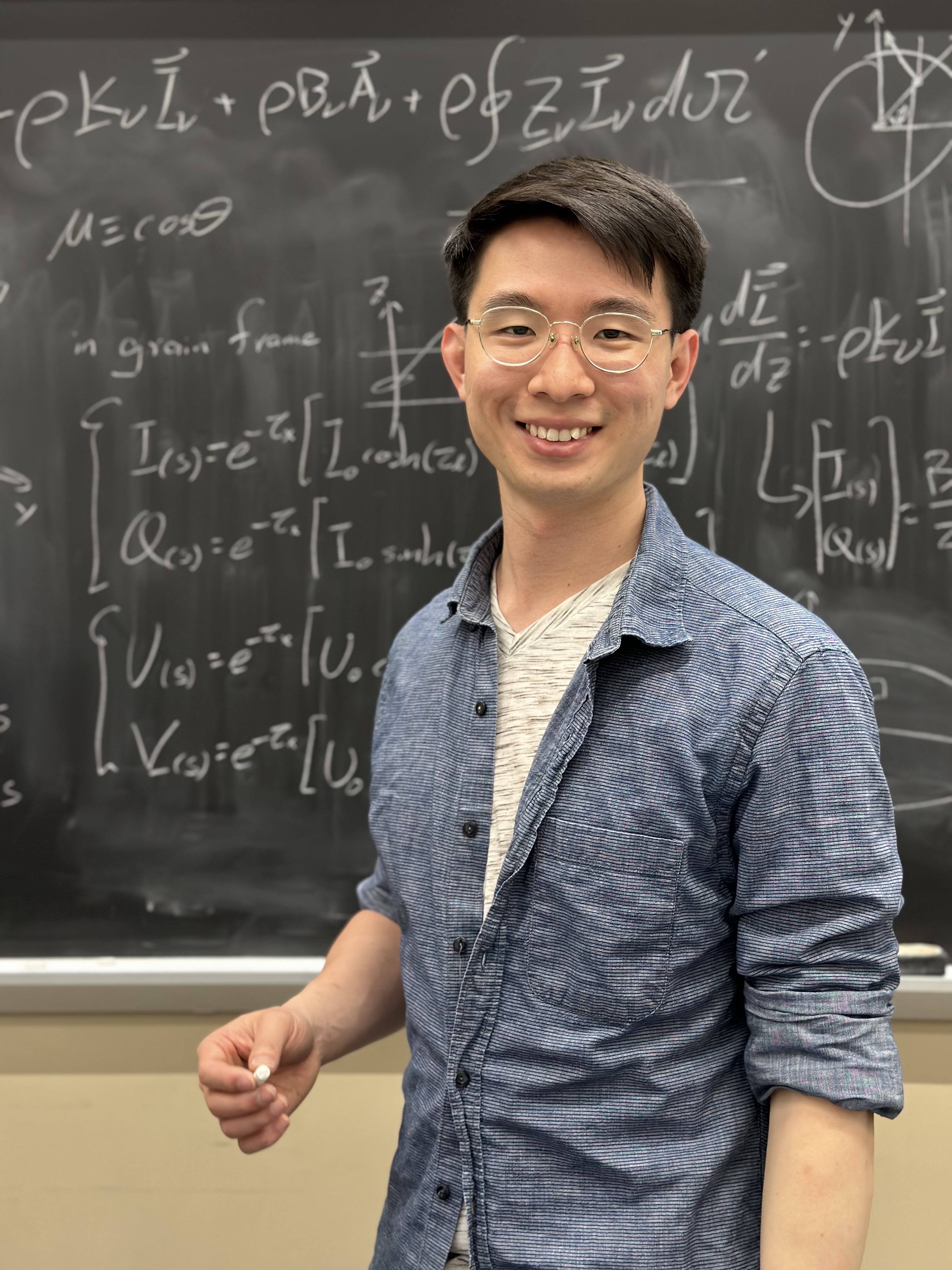
I am a Jansky Fellow at the National Radio Astronomy Observatory in the USA. My work focuses on understanding the behavior and properties of dust throughout the planet formation process from protoplanetary disks to debris disks. Through observations and theoretical modeling, I investigate the processes that transform interstellar dust into the building blocks of planets.

I was a postdoc at the Earth and Planets Laboratory of Carnegie Science working with Alycia Weinberger. I received my Ph.D. in Astronomy from the University of Virginia in 2024, where I worked with Prof. Zhi-Yun Li and Dr. John Tobin. Prior to my graduate studies, I earned my B.S. in Physics from National Chung Cheng University (中正大學) and worked at Academia Sinica Institute of Astronomy and Astrophysics as a research assistant with Dr. Hsi-Wei Yen (顏士韋) and Dr. Chin-Fei Lee (李景輝).

My research utilizes cutting-edge observational data, including high-resolution imaging and polarimetry using the Atacama Large Millimeter/submillimeter Array (ALMA). I implement advanced computational methods such as 3D Monte Carlo radiation transfer simulations and AI such as neural networks to gain physical insight from data. I am passionate about unraveling the complexities of dust evolution in diverse astrophysical environments and its implications for planet formation.

我是美國國立電波天文台(National Radio Astronomy Observatory)的研究員(Jansky Fellow)。我的研究重點是了解行星系統的形成與演化,追蹤塵埃從原行星盤到岩屑盤的變化歷程。透過觀測與理論模型,我研究將星際塵埃轉化為行星構建基塊的過程。

我曾在卡內基科學院(Carnegie Science)地球與行星實驗室擔任博士後研究員,與 Alycia Weinberger 博士合作。我於 2024 年在維吉尼亞大學(University of Virginia)取得天文學博士學位,師從 Zhi-Yun Li 教授和 John Tobin 博士。在攻讀研究所之前,我在國立中正大學取得物理學學士學位,並在中央研究院天文及天文物理研究所擔任顏士韋博士和李景輝博士的研究助理。

我的研究利用頂尖的觀測技術,包括使用阿塔卡馬大型毫米及次毫米波陣列(Atacama Large Millimeter/submillimeter Array;ALMA)進行高解析度成像與偏振光分析。偏振光揭示了塵埃顆粒的微觀特性,為探索行星形成環境的物理條件提供了一扇窗。我結合先進的計算方法,包括三維蒙特卡洛輻射轉移模擬,以及神經網路等機器學習方法,從數據中獲取物理洞見。我熱衷於追蹤塵埃在各種天文物理環境中的演化過程,以及這些塵埃的演化如何決定行星系統之初。歡迎由下方了解更多關於我的工作!我一向樂於與行星形成、原行星盤及相關天文物理領域的研究者進行合作與討論。


Guá sī Bí-kok Kok-li̍p Tiān-pho Thinn-bûn-tâi (National Radio Astronomy Observatory; NRAO) ê gián-kiù-uân (Jansky Fellow). Guá ê gián-kiù tiōng-tiám sī liáu-kái kiânn-tshenn hîng-sîng tsá-kî ê tîn-ia ê kiânn-ta̍h kah ti̍k-sìng. Thàu-kuè kuan-tshik tsham lí-lūn bôo-hîng, guá gián-kiú àn-tsuánn kā sing-tsè tîn-ia tsuán-huà sîng kiânn-tshenn ki-tè ê kuè-tîng.
2024 nî sî, guá tī Ui-tsí-ni-a Tāi-hàk (University of Virginia) tit-tio̍h thinn-bûn phok-sū ha̍k-uī, tuè LI Zhi-Yun kàu-siū kah John TOBIN phok-sū ha̍k-si̍p. Tsiânn-tsò gián-kiù-sing tsìn-tsîng, guá tī Kok-li̍p Tiong-tsìng Tāi-hàk (國立中正大學) tit-tio̍h bu̍t-lí-ha̍k ha̍k-ūi, koh tī Tiong-ng Gián-kiù-īnn kah Thinn-bûn-bu̍t-lí Gián-kiù-sóo (中央研究院天文及天文物理研究所) tam-jīm YEN Hsi-Wei (顏士韋) phok-sū kah LEE Chin-Fei (李景輝) phok-sū ê gián-kiù tsōo-lí.
Guá ê gián-kiù ūn-iōng tíng-tsiam ê kuan-tshik kang-hu, kânn sú-iōng ALMA tsìn-hîng kuân kak-hun-piān-lu̍t sîng-siōng kah phian-tín-kng, kap sian-tsìn kè-sǹg hong-huat, pí-lūn sann-uî Monte Carlo hok-siā tsuán-î bôo-gí. Guá lóo-li̍k kiat-sī tsióng-tsióng thinn-bûn-bu̍t-lí khuân-kíng tiong tîn-ia ián-huà ê ho̍k-tsa̍p kah tuì kiânn-tshenn hîng-sîng ê íng-hióng.
Kín-lâi khuànn ē-kha khah tsē iú-kuan-tio̍h guá ê khang-khuè! Guá huann-hí-lâi kah pa̍t ê gián-kiù-uân ha̍p-tsok koh thó-lūn kiânn-tshenn hîng-sîng, guân-kiânn-tshenn-puânn, kah siong-kan ê thinn-bûn-bu̍t-lí.


Research 研究領域 Gián-kiù

Birdie-like Alignment 類羽球塵粒排列 Luī ú-kiû lia̍p-á pâi-lia̍t

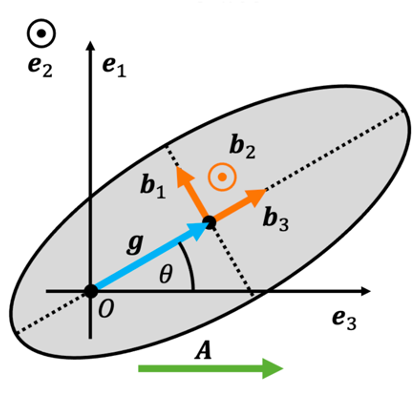
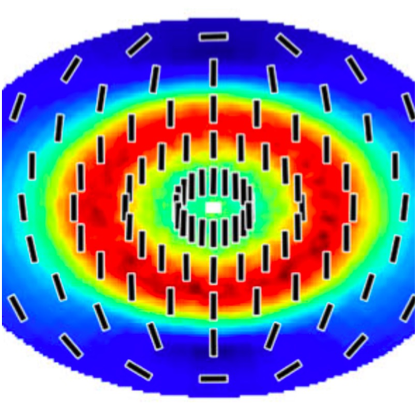
The observed existence of toroidally aligned, effectively prolate grains around planet-forming disks challenges conventional grain alignment mechanisms. Perhaps grains can be aligned to the aerodynamic flow of gas? 在原行星盤周圍,觀察到環狀排列的長球體顆粒,對傳統的顆粒排列機制提出了挑戰。顆粒是否排列於氣體的流動呢? Tī guân-kiânn-tshenn-puânn tsiu-uî, lán khuànn--tio̍h khuân-tsōng pâi-lia̍t ê tn̂g-tsu-înn lia̍p-á, thiáu-tsiàn tsìn-tsîng ê tín-lia̍p pâi-lia̍t ê ki-tsè. Khì-thé ê liû-tōng kám ē-sai kā tín-lia̍p pâi-lia̍t?

Scattering of Aligned Grains 排列塵粒的散射 Pâi-lia̍t lia̍p-á ê suánn-siā

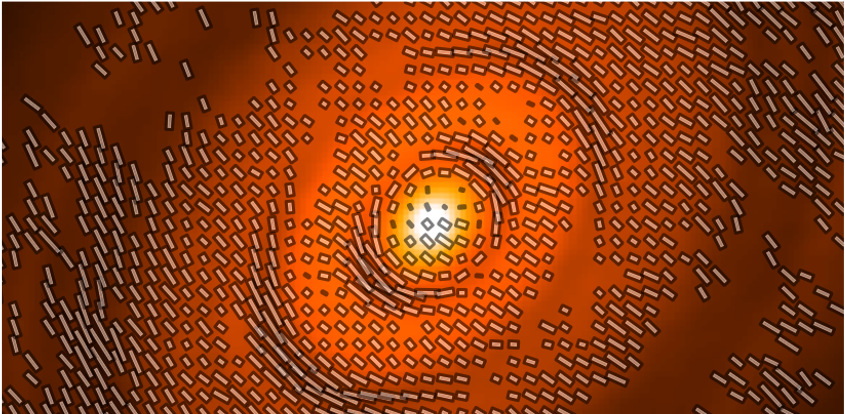
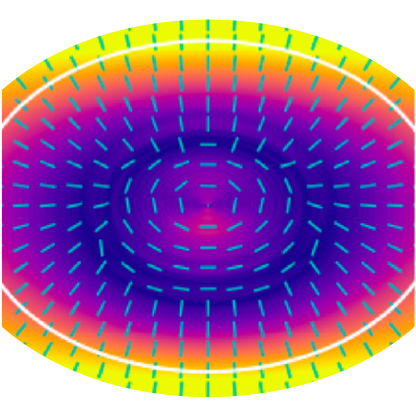
Circumstellar disks have revealed their mesmerizing polarization patterns, transitioning from unidirectional to elliptical formations at different wavelengths. In addition, HL Tau shows a transition in polarization pattern between rings and gaps. Curiously, neither scattering nor aligned grains alone can explain the phenomena. Can the combined effects explain both simultaneously? 拱星盤展現出令人著迷的偏振花紋,在不同波段從單向偏振轉變為橢圓向。此外,HL Tau在環與間隙之間,偏振花紋亦有轉變。有趣的是,單純的散射或排列顆粒都無法解釋這些現象。結合這兩種效應究竟能不能同時解釋這兩種現象? Guân-kiânn-tshenn-puânn thîng-hiān bê-lâng ê phian-tín hue-tsháu, tī m̄-kâng pho-tuānn uì tan-hîng-phian-tín piàn-sîng tn̂g-tsu-hîng. Koh-lâi, HL Tau tī khuân kah khang-kiah lâi-té ê phian-tín tôo-bûn mā ū piàn-huà. Tan-sûn ê suánn-siā ia̍h-sī pâi-lia̍t tîn-ia long bô-huat-tōo tsù-kái tse hiān-siōng. Kā tse nn̄g tsióng hāu-ìng lām-tsò-hué kam ē-sái tông-sî tsù-kái tse tsióng hiān-siōng?

Polarization Substructure 偏振光細微結構 Phian-tín-kng ê sè-bî kiat-kòo

Planetary growth begins with increasing the sizes of tiny grain particles. However, grain sizes inferred using polarization are much smaller than those measured without polarization. What’s going on? Apparently, resolving disk substructures, like dense rings and empty gaps, is crucial. 行星的增長始於加大微小顆粒的大小。然而,由偏振光推斷的顆粒尺寸小於由多波段光亮度測量的結果。究竟是怎麼回事?似乎,解析原行星盤的細微結構,例如交織的環與間隙,極為重要。 Hîng-tshenn ê sing-tióng sī uí sè lia̍p-á tńg tuā. m̄-koh, phian-tín-kng àn ê tshùn-tshioh pí to-pho-tuann kng-liāng-tōo ê kiat-kó khah sè. Ná ē án-ne? Ná-tshan-tshiūnn sī guân-kiânn-tshenn-puânn ê sè-bî kiat-kò, pí-lūn kau-tsit ê khuân kah khang-kiah, tsiânn tiōng-iàu.

Scattering of Irregular Grains 不規則狀塵粒散射 m̄-kui-tsik-hîng tín-lia̍p ê suánn-siā

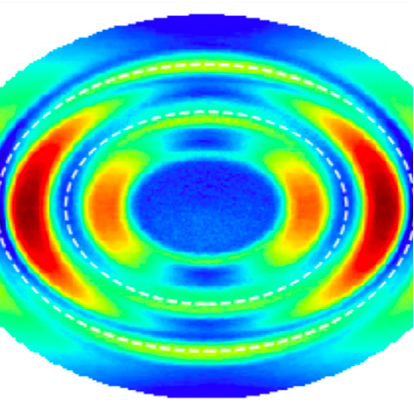
Obtaining observational constraints on the size of dust grains in circumstellar disks is challenging. Grain sizes inferred from polarization appear much smaller than those measured without polarization. Aside from substructure, could the issue lie in the assumption of spherical grains? Improvements in experimental techniques made this investigation possible. 測量原行星盤中的塵埃顆粒尺寸深具挑戰。從偏振光或多波段光亮度得來的尺寸仍存差異。除了細微結構外,問題是否在於常見的球狀塵粒假設?實驗技術的改進讓我們得以檢視這個研究。 Guân-kiânn-tshenn-puânn ê tín-lia̍p ê tshùn-tshioh tsin pháinn tshik-liông. Phian-tín-kng ia̍h-sī to-pho-tōo-kng àn ê tshùn-tshioh lóng bô-kâng. Sè-bî kiat-kò līng-guā ê būn-tê kám sī pîng-siông-sî ká-siat ê kiû-hîng tín-lia̍p? Si̍t-giām kang-hu ê tsìn-pōo hōo lán ē-sái kiám-tsa tsit-ē gián-kiù.

Polarization Reversal 偏振光轉逆 Phian-tín-kng liàn-tńg

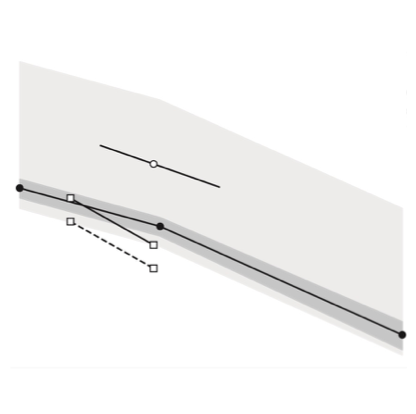
Polarization from aligned grains can probe the magnetic field or other alignment mechanisms. However, while polarization follows the largest cross-section of the elongated grain, polarization can flip if the temperature varies. How will it affect our interpretation of polarization from disks? 自排列塵粒的偏振可以探測磁場或其他排列機制。然而,視線方向如果有溫度變化,偏振方向則可能會轉逆。這將如何影響我們對盤偏振的解釋? Iōng pâi-lia̍t tín-lia̍p ê phian-tín lán ē-sái thàm-tshik tsû-tiûnn ia̍h-sī kî-thann pâi-lia̍t ê ki-tsè. m̄-koh, sī-suànn hong-hiòng nā ū un-tōo piàn-huà, phian-tín hong-hiòng tō ū khó-lîng ē tńg-gi̍k. Tse ē an-tsuánn íng-hióng lán tuí puânn ê phian-tín ê kái-sik?

Dust Settling 塵埃沉降 Tîn-ia tîm-kàng

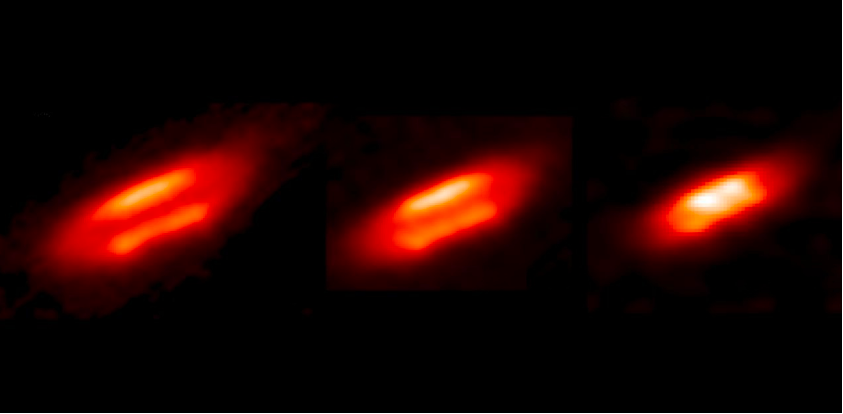
Dust Settling helps planetesimal formation since it increases the midplane dust-to-gas ratio which the streaming instability requires. The older, Class II disks are observed to be settled, but how early dust settling occurs is unclear. The Class 0 HH 212 mms and the Class I IRAS 04302+2247 disk are both young, edge-on disks. Are younger disks also settled and ready for planetesimal formation? Can we observe dust settling through time? 塵埃沉降助於微行星體的形成,因為它可以增加中平面的塵埃與氣體比率,進而符合沖流不穩定性所需的條件。較老的第二類盤已呈現塵埃沉降,但這現象始於何時尚不清楚。第零類HH212mms和第一類的IRAS04302+2247盤都是年幼、側向的原星盤。年輕的盤是否也已沉降並準備好形成微行星?又或者,我們能否觀察到塵埃隨時間沉降? Tîn-ia tîm-kàng ê tsōo bî-kiânn-tshenn ê hîng-sîng, in-uī i ē-sái tsing-ka tiong-uī-bīn ê tîn-ia hām khì-thé pí-lu̍t, lâi hû-ha̍p tshiâng-liû m̄-ún-tīng-sìng ài ê tiâu-kiānn. Khah lāu ê Tē 2 luī puânn í-kinn ū tîn-ia tîm-kàng, tān-sī lān iáu m̄ tsai tse hiān-siōng uí siánn-mi̍h sî-tsūn khai-sí. Tē 0 luī HH212mms kah Tē 1 luī IRAS04303+2247 puânn lóng sī iù-khí koh tshik-hiòng ê puânn. Iú-khí ê puânn kám mā tîm-kàng koh tsún-pī hó hîng-sîng bî-kiânn-tshenn? Lān kám ē-sái khuànn-tio̍h tîn-ia tuè sî-kan tîm-kàng?

Dust Opacity 塵埃不透明度 Tîn-ia m̄-thàu-bîng-tōo

Dust opacity is a fundamental property, but its value has long been elusive. Edge-on views of marginally gravitationally unstable disks provide unique perspectives that can constrain the dust opacity. Have conventional models of dust opacity for the past several decades been correct? 塵埃不透明度是原行星盤研究中的一個基本物理量,但其數值長期以來一直難以確定。處於臨界重力不穩定的側向盤提供了獨特的觀點,可以約束塵埃不透明度。過去幾十年來慣用的塵埃不透明度模型是否正確? Tîn-ia m̄-thàu-bîng-tōo sī guân-kiânn-tshen-puânn gián-kiù tiong ê tsi̍t-ê ki-pún ê bu̍t-lí-liōng, tān-sī i ê sòo-ti̍t tsiok-kú lóng tsin pháinn tshik-liōng. Tsi̍t-ê tshik-hiòng puânn nā-sī tī lím tiōng-li̍k m̄-ún-tīng-sìng, tō ē-tàng thê-kiong to̍k-ti̍k ê kuan-tiám, ē-sái niû tîn-ia m̄-thàu-bîng-tōo. Kuè-khì kuí tsa̍p nî kuàn-sì ê m̄-thàu-bîng-tōo bôo-hîng kám tio̍h.

Teaching 教學 Kà-tsheh

Introduction to the Sky and Solar System | University of Virginia (ASTR1210) | Summer 2023 天空與太陽系概論 | 維吉尼亞大學(University of Virginia)| 2023暑 Thinn-tíng kah Thài-iông-he Kài-lūn | Ui-tsí-ni-a Tāi-hàk (University of Virginia) | 2023 Sú

Content: This was a course on the night sky primarily for non-science majors. Topics include a brief history of astronomy; the properties of the Sun, Earth, Moon, planets, asteroids, meteors and comets; origin and evolution of the solar system; life in the universe; and recent results from space missions and ground-based telescopes.
Methods: I designed this course based on principals of technology enabled active learning. My classes include lectures, group problem solving exercises, in-class practice questions using Learning Catalytics, and demos. I used Mastering Astronomy for homeworks and visualizations. Ask me about how my students measured the size of sunspots with their phone!
內容:這是一門針對非理科學生的夜空課程。課程主題包括天文學歷史,太陽、地球、月球、行星、小行星、流星和彗星的特性,太陽系的起源與演化,宇宙中的生命,以及來自太空任務和地面望遠鏡的最新成果。
教學方法:我設計這門課是按照科技輔助主動學習的原則。課堂包括講座、小組問題解決練習、使用Learning Catalytics進行的課堂練習題,以及示範。我使用Mastering Astronomy進行作業和視覺化展示。歡迎問我,我的學生如何用手機測量太陽黑子的大小!
Luē-iông: Tse khò-tîng tsiam-tuì hui-lí-kho ha̍k-sing, kà àm-thinn-tíng. Khò-tîng tsú-iàu ū thinn-bûn-ha̍k ê li̍k-sú; thài-iông, tē-kiû, gue̍h-kiû, kiânn-tshenn, sè-kiânn-tshenn, liû-tshenn, kah tn̂g-bué-tshenn ê ti̍k-sìng; thài-iông-he ê kin-thâu kah ián-huà; ú-tiū tiong ê sènn-miā; koh ū thài-khong jīm-bū kah tē-bīn bōng-uán-kiànn siōng-sin ê sîng-kó.
Kà-tsheh hong-huat: Guá siat-kè tse khò-tîng guân-tsik tuí kho-ki hú-tsōo tsú-tōng ha̍k-si̍p. Khò-tn̂g ū káng-si̍p, sió-tsoo būn-tê kái-kuat liān-si̍p, ūn-iōng Learning Catalytics tī siōng-khò sî-tsun tsò liān-si̍p-tê, kah sī-huān. Guá sú-iōng mastering Astronomy tshut tsok-gia̍p koh sī-kak-huà tián-sī. Huan-gîng mn̄g guá guá ê ha̍k-sing án-nuá-iōng tshiú-ki-á tshik-liông thài-iông oo-tsí ê tuā-sè!

Introduction to Stars, Galaxies, and the Universe | University of Virginia (ASTR1220) | Summer 2021 恆星、星系和宇宙概論|維吉尼亞大學(University of Virginia)|2021暑 Hîng-tshenn, Tshenn-hē, kah Ú-tiū Kài-lūn | Ui-tsí-ni-a Tāi-hàk (University of Virginia) | 2021 Sú

Content: A study of stars, star formation, and evolution primarily for non-science majors. Topics include light, atoms, and modern observing technologies; origin of the chemical elements; supernovae, pulsars, neutron stars, and black holes; structure and evolution of our galaxy; nature of other galaxies; active galaxies and quasars; expanding universe, cosmology, the big bang, and the early universe.
Methods: I taught this course entirely through zoom. The course material is based on Mastering Astronomy following the Cosmic Perspective (Bennet et al.) and I included break-out room discussions and in-class practice questions using Learning Catalytics throughout my lectures. Ask me how I designed the course based on specifications grading!
內容:這是一門針對非理科專業學生的恆星、恆星形成和演化課程。主題包括光、原子和現代觀測技術;化學元素的起源;超新星、脈衝星、中子星和黑洞;我們銀河系的結構和演化;其他星系的性質;活躍星系和類星體;膨脹的宇宙、宇宙學、大爆炸和早期宇宙。
教學方法:這門課完全透過Zoom教學。課程材料主要利用Mastering Astronomy,而課本採用Cosmic Perspective (Bennett氏等),我在課程中加入了分組討論和使用Learning Catalytics進行的課堂練習。問問我如何採納規格評分(specifications grading)設計這門課程!
Luē-iông: Tse khò tsiam-tuì hui-lí-kho ha̍k-sing, kà hîng-tshenn, hîng-tshenn hîng-sîng, hām ián-huà. Khò-tîng tsú-iàu ū kng, guân-tsú, koh hiān-tāi kuan-tshik kang-hu; huà-ha̍k guân-sòo ê kin-thâu; tshiau-sin-tshenn, me̍h-tshiong-tshenn, koh àm-tōng; lán tshenn-hē ê kiat-kòo hām ián-huà; kî-thann tshenn-hē ê sìng-tsit; ua̍h-tshenn-hē kah luī-tshenn-thé; phòng-phok ê ú-tiū, ú-tiū-ha̍k, tuā-po̍k-tsà, koh tsá-tsîng ê ú-tiū.
Kà-tsheh hong-huat: Guá kà tse khò-tîng uân-tsuân iōng Zoom. Khò-tîng tsâi-liāu tsú-iàu lī-iōng Mastering Astronomy. Khò-pún iōng Cosmic Perspective (Bennett--sī tíng). Guá tī khò-tîng tsham sió-tsoo thó-lūn koh ūn-iōng Learning Catalytics tī siōng-khò sî-tsun tsò liān-si̍p-tê. Lâi mn̄g guá guá án-nuá tshái-la̍p kui-keh phîng-hun (specifications grading) khì siat-kè tse khò-tîng!

Press 新聞 Sin-bûn

2024/10/15 - What Do Planet Formation and Badminton Have in Common?

2023/11/15 - ALMA Observation of Young Star Reveals Details of Dust Grains

2023/07/14 - Astronomers Dig Deeper into Mystery of Planet Formation

2020/06/28 - Inferring the temperature structure of circumstellar disks from polarized emission

Other 其他 Kî-thann

When I'm not working, I'm either exploring different foods or playing with my dog. 工作之餘,我喜歡探索不同食物或陪我的狗狗玩。 Guá bô te tsò khang-khuè ê sî-tsūn, tio̍h te thàm-soh bô-kāng ê pn̄g-tshài, ia̍h-sī kah guá káu-á sńg.